


Companies today still live and die by trust.
For SaaS companies, especially startups and growing teams handling sensitive customer data, SOC 2 has become a widely recognized attestation that demonstrates strong information security, data protection, and a mature security posture to customers and partners.
If you want to build trust with enterprise customers, close larger deals, and move upmarket, SOC 2 compliance is often table stakes. Buyers expect it, procurement teams ask for it early, and security questionnaires increasingly assume you already have a report in hand.
The challenge is that SOC 2 was never designed to be easy.
Preparing for and completing a SOC 2 audit can take months of work, cost tens of thousands of dollars, and pull engineering, IT, HR, and leadership away from high-value projects. For lean teams without dedicated compliance resources, that burden can become a real growth blocker.
That’s why more companies are turning to SOC 2 compliance automation. Not to shortcut security or “check a box,” but to replace repetitive, manual work with systems that make compliance more manageable and sustainable over time.
So what’s the real difference between manual and automated SOC 2 compliance, and when does automation actually make sense?
What is SOC 2 compliance automation?
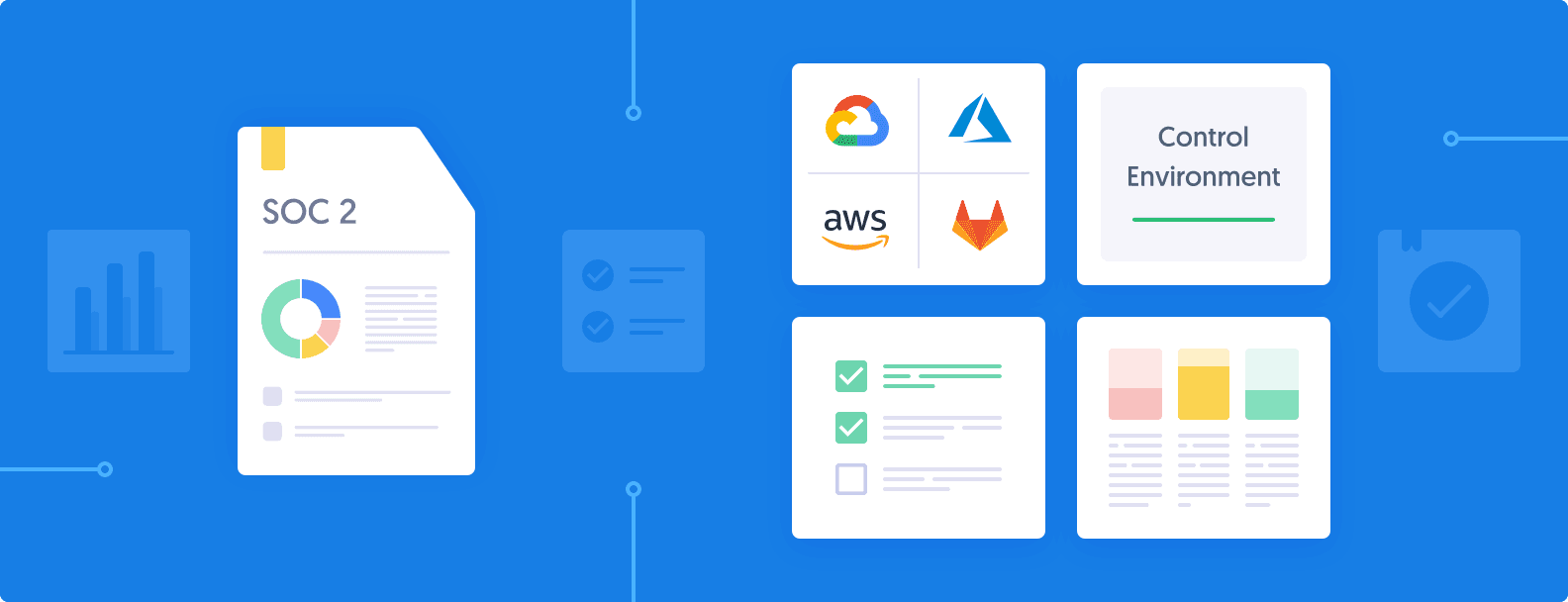
SOC 2 compliance automation uses software to streamline the work required to prepare for and complete a SOC 2 audit.
Instead of manually completing a gap analysis, collecting screenshots, exporting logs, updating spreadsheets, and chasing control owners before every annual audit, automation tools connect directly to your existing systems. They flag missing compliance requirements, continuously monitor your controls, collect evidence, and organize everything in one place so you’re never starting from scratch.
The biggest shift automation enables is moving SOC 2 from an annual fire drill to an ongoing process. Compliance stops being something you scramble to prepare for once a year and becomes something that runs quietly in the background as your environment changes.
Manual SOC 2 compliance: Where teams get stuck
When SOC 2 is managed manually, most of the effort goes into work that doesn’t meaningfully improve security.
Teams spend weeks gathering evidence from different tools, renaming files, organizing folders, and making sure screenshots fall within the auditor’s testing window. Policies live in shared drives with unclear ownership. Gaps often don’t surface until right before the audit, when remediation is most stressful and expensive.
This approach technically works, but it doesn’t scale well. As your company grows, adds tools, hires employees, and expands into new markets, the amount of manual effort increases quickly. Each audit feels like starting over, even if very little has actually changed.
Manual audit preparation also increases the risk of human error, especially as compliance requirements evolve and teams rely on spreadsheets and screenshots to prove controls are implemented and effective.
How SOC 2 compliance automation changes the process
Automation doesn’t eliminate the need to understand your controls or own your security program, but it dramatically reduces the manual overhead.
A SOC 2 compliance automation platform typically works by integrating with the tools you already use, such as your cloud provider, identity system, endpoint security, HR platform, and ticketing tools. From there, it automatically compares your existing security posture against SOC 2 requirements to identify any gaps, continuously checks whether controls are configured correctly, and collects evidence automatically as those systems operate.
Instead of updating evidence at the last minute, evidence is captured throughout the year. Instead of guessing where gaps might exist, you can see control status in real time. Instead of building audit folders by hand, you can share organized, audit-ready documentation with your auditor to minimize back and forth.
For many teams, this shift alone is enough to cut audit prep time dramatically and reduce the stress that typically comes with SOC 2. Nearly half of Secureframe customers say they’ve reduced audit prep by 25-50%, and another 36% are able to prepare for audits in less than half the time.
What SOC 2 automation can and can’t do
It’s important to be clear about what SOC 2 automation is and isn’t. SOC 2 can’t be fully automated, and that’s not a weakness of the framework or the tools. It’s simply the reality of how security and compliance work.
Automation is extremely effective at handling repeatable, system-driven tasks. That includes time-consuming work like evidence collection, continuous monitoring, reminders for recurring activities, and keeping documentation organized and up to date. These are the areas that typically slow teams down and introduce unnecessary risk when managed manually.
What automation can’t replace is human judgment. Decisions about audit scope, risk management, and how controls should be designed and applied still require context and accountability. Automation can help teams monitor security controls and validate that SOC 2 controls are operating as expected, but it doesn’t make decisions for you or define what “good” looks like for your business.
It also doesn’t change what you’re audited on. Every SOC 2 report is still based on the AICPA Trust Services Criteria. Security is always required, and additional categories like availability, processing integrity, confidentiality, and privacy are included based on how your service operates and what customers expect. Automation doesn’t alter those requirements. It simply makes it easier to map evidence to them consistently and maintain that alignment as your environment evolves.
The most effective teams use SOC 2 automation to remove friction from the process, not responsibility. By letting software handle the tedious work, teams can focus their energy on the parts of SOC 2 that actually require thought, context, and informed decision-making.
Key benefits of SOC 2 compliance automation
At its core, SOC 2 compliance automation reduces the amount of manual work required to run a compliance program. Automated evidence collection, control testing, and task tracking free teams from time-consuming administrative effort and allow them to focus on higher-impact work. This reduction in overhead is one of the most consistently reported benefits among Secureframe customers. In a UserEvidence survey, 97% of users said they reduced the time spent on compliance tasks each month, with more than three-quarters cutting that time by at least half.
Automation also gives teams earlier and clearer visibility into issues. Instead of discovering gaps during audit preparation, teams can see misconfigurations or control failures as they happen and address them before they become audit exceptions. Most platforms surface this information through centralized dashboards that show real-time compliance status, outstanding tasks, and overall control health. These dashboards, combined with automated workflows, are a key reason compliance automation has become a foundational part of modern GRC programs rather than a one-off audit tool.
Another major advantage is having a single source of truth. When evidence, policies, risks, and control status all live in one system, it becomes easier to answer auditor questions, respond to customer security reviews, and understand where your compliance program stands at any moment. This consolidation also reduces the back-and-forth that often slows audits down. In fact, 95% of Secureframe users reported saving time and resources when obtaining and maintaining compliance.
Automation also makes it easier to maintain compliance over time. Continuous monitoring helps teams catch drift, reduce the risk of non-compliance, and avoid last-minute remediation. This is especially important for SOC 2 Type 2 audits, where evidence needs to demonstrate that controls operated effectively over an extended period. Rather than reconstructing months of history, teams can rely on automated logs and testing data collected in real time. For many organizations, this turns SOC 2 from a one-time milestone into an ongoing compliance journey that supports long-term SOC 2 readiness and continuous compliance.
Finally, SOC 2 automation simplifies expansion into additional frameworks. As companies grow, especially in regulated industries like fintech, SOC 2 often overlaps with standards such as ISO 27001 or PCI DSS. Automation improves scalability by allowing teams to reuse controls and evidence across frameworks, reducing duplicated effort while maintaining consistent data security practices. Secureframe customers report meaningful gains here as well, with 89% saying automation helped speed up time-to-compliance for multiple frameworks.
SOC 2 automation is most effective when it supports, rather than replaces, ownership. Teams still need to define scope, assess risk, and understand how controls are implemented. Automation handles the repetitive work so stakeholders can focus on building and maintaining a strong security and compliance program.
Who needs SOC 2 automation?
SOC 2 compliance automation isn’t only for large enterprises. It’s most useful for teams that are feeling the strain of managing compliance manually or starting to see SOC 2 become a gating factor for growth.
Automation often makes sense when prospects or customers are asking for a SOC 2 report, especially if you’re selling to enterprise buyers or operating in regulated industries like healthcare, finance, or retail. It also becomes valuable when audits feel painful and unpredictable, or when issues tend to surface late in the process and force rushed remediation.
Periods of rapid growth are another common trigger. As teams scale, add new tools to their tech stack, and onboard employees more frequently, it becomes harder to enforce compliance processes consistently without adding overhead. Automation helps maintain reliable functionality and control enforcement through change, rather than relying on ad hoc processes and best intentions.
For early-stage teams, SOC 2 automation can provide structure and guidance at a time when compliance expertise may be limited. For more mature organizations, it helps scale compliance without scaling headcount, offering peace of mind that compliance is being maintained continuously even as the business and the SOC 2 framework evolve.
If the following applies to your organization, a compliance automation tool probably makes sense for your needs:
- Your company is (or customers are) in the healthcare, finance, retail, or other industries where compliance is required
- Your target customers include enterprise brands in the US
- Prospects are asking whether your organization has is SOC 2 compliant
- Your team is spending a significant amount of time and resources on highly manual and repetitive tasks like evidence collection
- Issues are often identified right before or during an audit, leaving you to scramble to remediate them
- You'd like peace of mind that you're maintaining compliance, even as the SOC 2 framework or your organization undergoes changes
How to choose the right SOC 2 compliance automation software
Not all SOC 2 automation platforms are created equal, and the differences matter most when you’re going through your first audit.
The right platform should do more than help you pass a point-in-time assessment. It should give you clarity early in the process, reduce manual effort throughout the year, and support you as your compliance program matures. That means focusing on how the platform actually supports audit readiness and long-term scalability.
Gap analysis and early visibility
For first-time SOC 2 teams, understanding where you stand at the beginning is critical. Built-in gap analysis helps you see which SOC 2 controls apply to your environment, what’s already in place, and what still needs work. This early visibility makes it easier to prioritize remediation and avoid surprises late in the audit process.
Continuous control monitoring
Point-in-time checks can’t catch configuration drift or changes that happen between audits. Continuous monitoring helps teams spot issues early and fix them before they become audit exceptions, which is especially important when preparing for a SOC 2 Type 2 report.
Automated evidence collection
Instead of relying on screenshots and manual exports, the platform should continuously collect audit-ready evidence from the tools you already use. This saves time, reduces the risk of missing evidence, and helps ensure testing windows are met without last-minute scrambling.
Policy and document management
For teams starting from zero, writing SOC 2 policies from scratch can be one of the most time-consuming and intimidating parts of the process. Strong automation platforms include auditor-reviewed policy templates that are designed to meet SOC 2 requirements while still being customizable to your organization.
Policy and document management tools should make it easy to tailor security policies to your environment, track approvals, and distribute them to employees without relying on shared folders or ad hoc workflows. This reduces the temptation to rely on generic boilerplate policies and helps ensure documentation actually reflects how your controls are implemented in practice.
Expert support when it matters
First-time SOC 2 audits almost always come with questions and edge cases. Access to experienced compliance experts who understand both the framework and the audit process can make a meaningful difference. Look for platforms that offer guidance before, during, and after the audit process.
Beyond these core features, it’s worth considering how well the platform integrates with your existing tech stack and whether it can support additional compliance frameworks in the future. The goal isn’t just to get through your first SOC 2 audit, but to build a compliance program that grows with your business without adding unnecessary overhead.
Here are a few questions to ask during the evaluation process to help you determine which software is the best fit for you:
- Are your chosen security frameworks supported? Be sure to consider any you may need as your company scales.
- Is the number and depth of integrations enough to save your team from excess work? To evaluate this, ask vendors about the integrations you need. What do these integrations do and what data do they collect?
- What is the level of customer support? What channels are available to receive support? Does that support extend through the audit process itself and after?
- What is the vendor’s relationship with the auditor?
- What type of audit scope is included in the pricing package? Look for clear, transparent pricing and packages. You want to know exactly what you’re paying for without hidden costs.
Compliance Automation Platform Buyer’s Guide
Learn how a compliance automation platform can help streamline and scale your security and compliance efforts, then use an evaluation form to fast-track the vendor evaluation process.
SOC 2 compliance automation doesn’t replace accountability or good security practices. What it does is remove unnecessary friction from the process so teams can focus on building and operating secure systems instead of managing spreadsheets and screenshots.
For companies that view SOC 2 as part of their growth strategy rather than a one-time hurdle, automation has become less of a nice-to-have and more of a practical necessity.
Use trust to accelerate growth

About the UserEvidence Survey
The data about Secureframe users was obtained through an online survey conducted by UserEvidence in February 2024. The survey included responses from 44 Secureframe users (the majority of whom were manager-level or above) across the information technology, consumer discretionary, industrials, financial, and healthcare industries.
How does SOC 2 automation improve security posture?
SOC 2 compliance automation improves an organization’s security posture by continuously monitoring controls, reducing human error, and giving teams real-time visibility into risks instead of relying on point-in-time check.
Is SOC 2 automation only for large companies?
No. Many startups and growing SaaS companies adopt automation early to manage audit preparation, protect customer data, and build a scalable GRC foundation without adding headcount.
How does SOC 2 automation relate to broader cybersecurity frameworks?
SOC 2 automation often supports broader cybersecurity and data protection efforts by aligning controls with frameworks like NIST and PCI DSS, helping teams manage overlapping security compliance requirements more efficiently.
Does SOC 2 automation help with continuous compliance?
Yes. By tracking compliance status in real time and supporting continuous compliance, automation reduces last-minute audit stress and helps teams stay ready year-round.


